
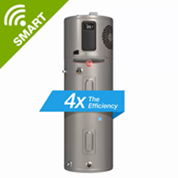
The ‘hybrid’ aspect of these water heaters denotes they can run in either ‘resistance’ or ‘heat pump’ mode, and sometimes both at the same time. This provides lots of flexibility in how you use the water heater. Resistance heating is faster than heat pump heating, and so on days where there is extra heavy hot water usage, you can switch to resistance heating easily.
One issue people get concerned about with the new hybrid heat pump water heaters is that, as they are typically installed in the basement, they ‘extract heat’ from air in the basement which will cool the basement a bit. This can be desirable in the spring, summer, and fall months, but not ideal in the winter months. In typical usage, depending on the size of the basement and the water heater, you might see a 3 to 6 degree temperature reduction. But here is the good news — you can always just switch the water heater to ‘resistance’ mode for the winter months to avoid this concern, and (using the above ‘typical’ heater) you’ll still have an overall UEF of 3.06, and so you’ll still be saving money versus a natural gas-fired water heater (and saving ~2/3 of the electricity expense of a traditional electrical ‘resistance’ water heater).
Looking further at the financial side of the equation, if you select an Energy Star model, you’ll get a 30% federal tax credit, and a $700 rebate from your electric utility (don’t forget to apply for the rebate at installation time!). More information on ‘hybrid’ water heaters is available here (federal) and here (NYS), and you can find them at Lowes, Home Depot, or wherever you prefer to buy your water heaters.