
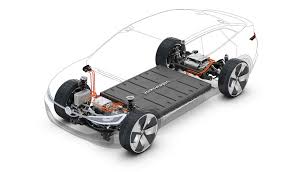
And here’s the thing — EV’s can be better than gas-powered cars in vital aspects. Here are just some of the attributes of EV’s that people prefer over ‘traditional’ vehicles:
- Acceleration — even ‘economy’ EV’s have stunning acceleration capabilities. For example, a 2023 Chevrolet Bolt can achieve 0-60 mph in 6.6 seconds! Think about that — it’s faster than a 1985 Camaro IROC-Z!
- Cornering — the same Bolt can provide 0.79g on the skidpad — that’s better than the 1984 Mustang SVO!
- Quiet — ‘traditional’ cars make a true racket compared to EV’s, due to engine noise (especially during acceleration). This is noticed by people in the car (in the absence of active noise cancellation technology) and also to observers outside the car. (EV’s are required to make extra noise at slow speeds due to their intrinsic quietness, but this noise isn’t heard by occupants of the EV if the windows are closed.)
- Odor-free acceleration — Most ‘traditional’ cars and SUV’s emit substantial amounts of NOx (a pollutant which smells kind of like chalk) into the air while accelerating. This is not an issue with EV’s!
- Minimal maintenance — unlike traditional cars with their extensive maintenance schedules, most EV’s don’t need any periodic maintenance other than tires, flushing/filling the brake lines, and cabin air filter replacement. You are likely to save a substantial amount of money on maintenance of the EV.
If this is a ‘big deal’ for you, there are certainly EV’s with better specs that could reduce the extra time considerably. For example, a 2022 Tesla Model 3 Long Range can go 260 miles at 70 mph, and many Tesla Superchargers can recharge the car in 30 minutes or less. So the equation here might be 3.5 hours of driving followed by a half hour of charging, which may be more palatable if you’re in a hurry :-).
But regardless of the specifics of the EV you choose, one can most assuredly adapt their expectations on how long it will take to get to a destination, and this can be planned appropriately. And so as long as the EV charging stations are functioning properly, and they are not fully occupied, the road trip can proceed as planned. But perhaps if you had an EV, you would use it for some road trips, and rent or swap for a gas-powered car for other road trips where time is ‘of the essence’. Using the EV every day would still hugely reduce the carbon dioxide that is produced by your transportation, and so challenges with managing road trips should not be a ‘showstopper’, as you’ll have the tools to address them.
And so, an EV is definitely something you ought to seriously consider when you are looking for your next vehicle. Remember, some EV’s get a $7,500tax credit from the federal government
, along with a $2,000 point-of-purchase rebate from the New York state government, and these incentives can bring the overall costs of an EV (given their low maintenance requirements and less expensive ‘fuel’ source) well below that of a ‘traditional’ car or SUV. Shop wisely 🙂