
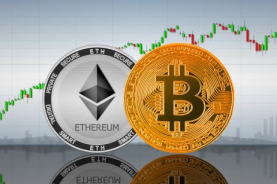
Cryptocurrencies have garnered lots of attention, and a fair amount of hype as well, over the past 5-10 years. The ‘first-mover’ in this space was Bitcoin, and so it has had the advantage of being the ‘go-to’ option for crypto investors and speculators, and it also has a lead in development of additional “investment packaging”. But Bitcoin has a huge problem from a climate perspective — the more expensive it gets; the more energy is consumed to support its ‘blockchain’ (which is the distributed ledger used to keep track of all Bitcoin transactions). And we aren’t talking small amounts of energy here; in November of 2024, each individual Bitcoin transaction is consuming over 800 KWh of electricity! That’s almost as much electricity as the average American household consumes in a month…
With the recent increasing rate of electricity consumption by the Bitcoin blockchain, it has used more electricity than the entire country of Poland over the past year. (Yes, you read that right.) Along with its vast electricity usage and associated carbon footprint, Bitcoin activities also consume massive amounts of water and contribute greatly to electronic waste.
Do you really want to support this huge consumption of resources to generate nothing of tangible value? Are you really convinced that cryptocurrencies in general, and Bitcoin in particular, are not yet another example of economic bubbles, which have occurred frequently, documented as far back as the Tulip Mania of the 1630’s? And finally, considering that we all get anxious about meeting our investing goals, and this can encourage us to latch onto the latest hot speculative trends, is it possible that a better investing outcome would result if you instead reduced your anxiety by working with a certified financial advisor?
The rise of Bitcoin was originally fed by the true believers, who insisted that centralized financial transaction systems provided too much information and control to governments, large banks and corporations. They fawned over the superior security of the Bitcoin blockchain, which gets replicated and verified on each ‘full node’ in the Bitcoin network. Yet they ignored the lack of scalability inherent in the design of the Bitcoin ecosystem. To note, Bitcoin is currently ‘maxed out’ at ~600,000 transactions per day globally — for comparison, hotels globally process about 4 million customer transactions per day, and McDonalds globally processes about 70 million.
But Bitcoin’s rise has been fueled by people with motives much more in the realm of personal greed versus what is best for society at large. They likely realized that each Bitcoin transaction was ridiculously expensive in terms of energy, water, and other resources consumed, and thus Bitcoin transactions (and by extension Bitcoin itself) have no fundamental value compared to virtually any other method of executing financial transactions. (Each transaction currently costs about $88, and yet the person executing the transaction is only charged about $1 — and so the Bitcoin miners get more than $87 per transaction from the value of the Bitcoin they are awarded for performing ‘proof of work’ required to process the transactions.) Yet they also realized that the Bitcoin ecosystem was designed to ensure scarcity of Bitcoins, and so as long as ‘greater fools’ could be found to buy Bitcoin from them, the price of Bitcoin would inexorably rise over time and they would continue to profit.
This second cohort of Bitcoin evangelists, who have infiltrated segments of the financial press (and certain political parties), implemented financial products to provide a variety of opportunities for ‘greater fools’ to invest in Bitcoin. And so, as of this writing, with the price of Bitcoin marching higher over time, the availability of ‘greater fools’ appears to be unlimited. However, that is also true of any financial mania — but it never lasts forever… One way or another, enough people become better informed and make the personal choice to not “follow the herd”, and eventually a tipping point is reached when the supply of available buyers peaks and then starts to diminish rapidly, resulting in the final resounding crash of the “mania du jour”…
Fortunately, if you do feel you need to participate in cryptocurrency investing or speculation, there are other options that both (a) perform well, and (b) have miniscule resource consumption per transaction than does Bitcoin. I invite you to investigate Ethereum, a long-time competitor to Bitcoin. Ethereum moved from the ‘Proof of Work’ model Bitcoin uses, to a different model called ‘Proof of Stake’, in September of 2022. The ‘Proof of Stake’ model requires virtually no computing effort to maintain the Ethereum blockchain. Thus, Ethereum went from consuming electricity at an annual rate of 94 TWh/year, down to 0.1 TWh/year! That is a pretty spectacular reduction, don’t you think? And Ethereum has increased in value by ~109% from the date it changed models until early November of 2024.
Granted, Ethereum has not performed as well as Bitcoin has over the same time period, with the latter increasing in value by ~278%, but one could argue that given the huge resource-consumption flaws inherent in Bitcoin, it is only a matter of time before Ethereum takes the lead as the preeminent cryptocurrency and leaves Bitcoin in its dust. In fact, Ethereum is already blowing away Bitcoin in the number of transactions per day, averaging ~1.2 million for Ethereum versus ~600,000 for Bitcoin.
So, the writing is on the wall. Let’s get with the program, and if a CFA isn’t a sufficient alternative, at least switch your crypto investments from Bitcoin to Ethereum. You’ll definitely be investing in the more environmentally-friendly alternative, and you’ll likely experience a better rate of return over time. 🙂